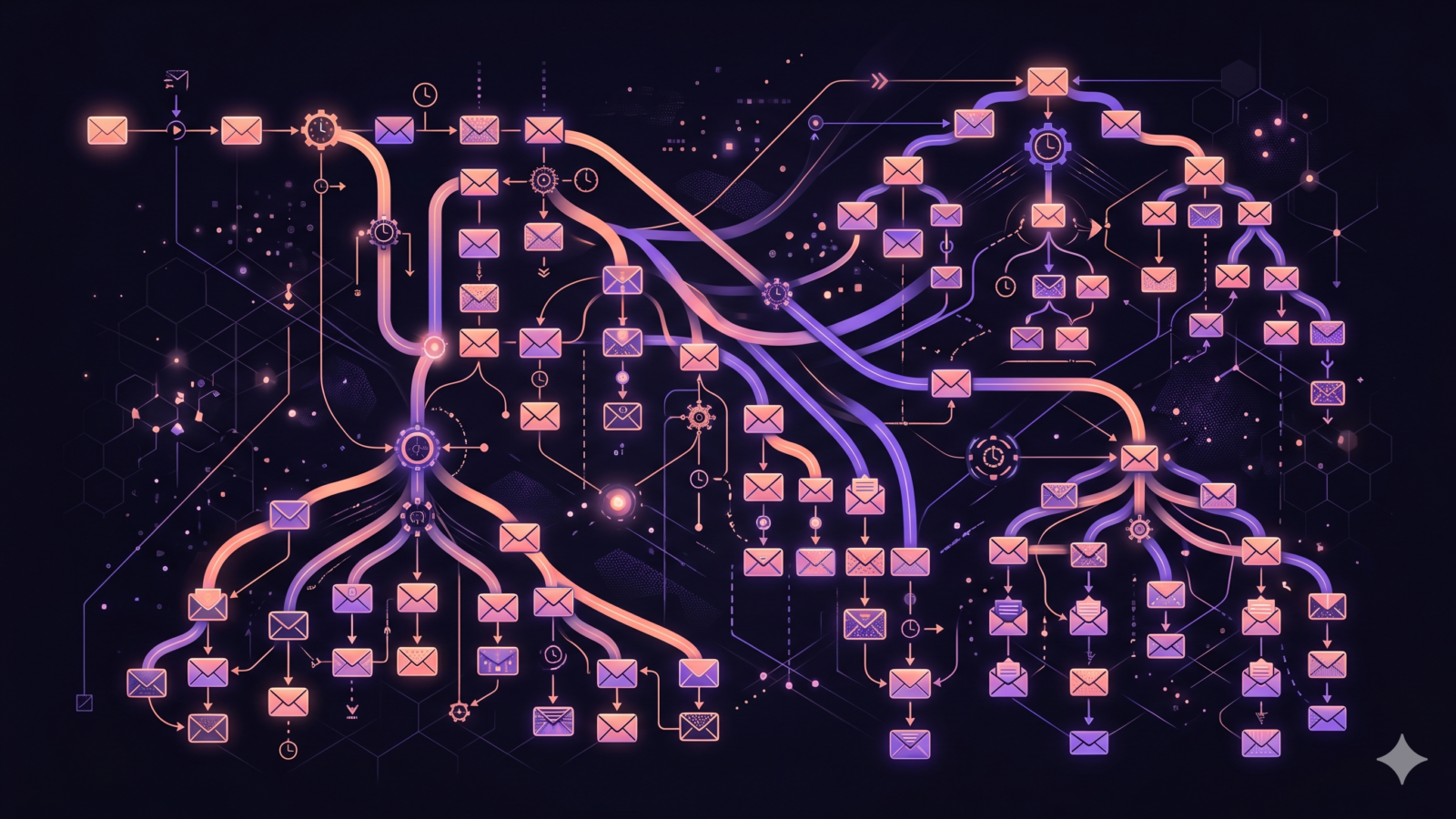
If you’re looking to increase conversions and build stronger customer relationships, studying proven drip campaign examples is one of the smartest investments of your time. Email drip sequences—those strategically timed, automated messages that guide subscribers through specific journeys—consistently outperform one-off email blasts by 80% or more in engagement and conversion rates. The difference between a drip campaign that converts at 2% and one that converts at 15% often comes down to understanding the proven frameworks that top-performing brands use across different campaign types.
We’ve analyzed hundreds of automated email campaigns across our client portfolio to identify what actually moves the needle. This guide breaks down seven high-converting drip campaign examples with specific timing, content frameworks, and benchmarks you can apply immediately to your business.
Welcome Series: Your First Impression at Scale
A well-crafted welcome email series generates 320% more revenue per email than standard promotional messages, making it the highest-ROI sequence in your arsenal. This sequence typically runs 3-5 emails over 7-14 days and serves one critical purpose: transforming new subscribers into engaged community members who understand your value proposition.
Email 1 (sent immediately) should deliver whatever you promised in your signup form—a discount code, downloadable resource, or exclusive content. Subject line formula: “Here’s your [promised item] + what’s next.” This email typically sees 40-60% open rates when delivered within 60 seconds of signup.
Email 2 (day 2-3) introduces your brand story and core value proposition. Share your origin story, mission, or what makes you different. Keep it conversational and authentic. Average open rates drop to 25-35%, but engagement quality increases as you’re filtering for genuinely interested subscribers.
Email 3 (day 5-7) showcases social proof through customer testimonials, case studies, or user-generated content. Include specific results when possible: “How Sarah increased her email list by 400% in 60 days.”
Email 4 (day 10-12) presents your core offer or best-selling product with a time-sensitive incentive. This is where conversion happens—benchmark for 3-8% click-through to purchase.
Email 5 (day 14, optional) addresses common objections or FAQ items, removing final barriers to purchase. Our AI & Automation services can help identify which objections appear most frequently in your customer journey and personalize this email accordingly.
Product Education Sequences That Drive Activation
Product education drip campaigns bridge the gap between purchase and product adoption, directly impacting retention and lifetime value. These nurture sequence examples work particularly well for SaaS products, complex services, or products with learning curves.
The optimal sequence length is 5-8 emails over 21-30 days, each focused on a single feature or use case. The framework follows a “crawl, walk, run” progression:
- Emails 1-2: Basic setup and “quick win” features that deliver immediate value
- Emails 3-5: Intermediate features that solve specific pain points
- Emails 6-8: Advanced capabilities and integration opportunities
Subject line patterns that perform well: “Get more from [product]: [specific benefit]” or “[Time frame] to master [specific feature].” Video tutorials embedded directly in emails (not just linked) increase engagement by 200-300% compared to text-only instructions.
Timing matters significantly here. Send emails every 3-4 days rather than daily—you want users to actually implement what they’ve learned before introducing new concepts. Companies using this spacing see 40% higher feature adoption rates than those sending daily education emails.
Trial Conversion Sequences: Turning Browsers into Buyers
Free trial conversion campaigns face a specific challenge: converting time-limited interest into committed customers before the trial expires. The most effective drip campaign examples in this category use a 7-14 day sequence aligned precisely with trial length.
Email 1 (day 0) confirms trial activation and sets expectations. Include a clear roadmap of what they’ll receive during the trial period and one specific action to take immediately—ideally something that delivers value within 5 minutes.
Email 2-3 (days 2-4) focus on activation milestones. “You’ve completed step one—here’s what successful users do next.” Each email should celebrate progress while guiding toward the next value-generating action.
Email 4 (day 5-7, mid-trial) introduces a case study from a similar customer. Specificity drives conversion here: “How a 5-person marketing team increased lead quality by 67%.”
Email 5-6 (days 8-12) build urgency without being pushy. Share what they’ll lose access to when the trial ends, offer to answer questions, and present pricing options with annual discount incentives.
Email 7 (final day) presents the conversion moment with a clear, simple call-to-action and potentially a limited-time upgrade bonus. Well-executed trial sequences convert 15-25% of trial users to paid customers, compared to 5-10% without strategic nurturing.
Post-Purchase Campaigns That Maximize Customer Lifetime Value
Post-purchase automated email campaigns turn one-time buyers into repeat customers and brand advocates. This sequence typically spans 30-90 days with 4-6 touchpoints strategically timed around the product experience.
Email 1 (immediately post-purchase) confirms the order and sets delivery expectations. Include tracking information, customer service contact details, and—critically—suggestions for getting maximum value from their purchase.
Email 2 (timed to product arrival) asks “Did it arrive?” and provides usage tips or setup instructions. For physical products, this arrives 2-5 days post-purchase depending on shipping. For digital products, it arrives 24-48 hours post-purchase, after the initial excitement settles.
Email 3 (7-14 days) requests feedback and reviews. The subject line “How’s [product name] working out?” gets 35-45% open rates. Including a direct link to leave a review and explaining why reviews matter to your business increases review submission by 40%.
Email 4 (21-30 days) introduces complementary products or cross-sell opportunities based on purchase history. Frame these as “customers who bought [X] also loved [Y]” rather than aggressive upsells. Conversion rates on these recommendations range from 8-15% when properly segmented.
Email 5 (60-90 days) re-engages with exclusive offers, loyalty program invitations, or replenishment reminders for consumable products. This email should feel like VIP treatment, not just another promotion. Our Retention & Tracking services help identify the optimal timing for these touchpoints based on your specific customer behavior patterns.
What Makes an Abandoned Cart Sequence Actually Convert?
The best abandoned cart email drip sequences recover 10-15% of abandoned carts when properly executed, directly adding revenue that would otherwise be lost. The key is a 3-email sequence sent over 24-72 hours with increasing urgency and value.
Email 1 arrives 1-3 hours after cart abandonment with a simple reminder: “You left something behind.” Include product images, names, and prices. Keep copy minimal and the CTA obvious—just get them back to checkout. This email alone recovers 4-6% of carts with 40-50% open rates.
Email 2 (sent 24 hours later if cart remains abandoned) addresses potential objections. Include customer reviews of abandoned items, highlight your return policy, showcase security badges, or offer live chat support. Subject lines like “Questions about [product name]?” outperform aggressive discount offers at this stage.
Email 3 (48-72 hours) introduces a time-sensitive incentive—but only if necessary for your business model. A 10-15% discount or free shipping offer converts an additional 3-5% of abandoned carts. However, excessive discounting trains customers to abandon carts intentionally, so test whether incentive-free sequences work for your audience first.
Re-Engagement Campaigns That Win Back Inactive Subscribers
Re-engagement drip campaigns target subscribers who haven’t opened emails in 60-90 days, attempting to reactivate them before they become completely disengaged. These email drip sequences typically run 3-4 emails over 14-21 days with a clear decision point at the end.
Email 1 acknowledges the absence directly: “We’ve missed you” or “It’s been a while.” Remind them why they subscribed originally and showcase your best recent content or offers. Open rates on this email typically hit 15-25%—lower than engaged subscribers but significantly higher than your recent emails to this segment.
Email 2 (7 days later) offers a preference center or asks what they want to hear about. “Help us send you better emails” as a subject line respects their inbox and often surfaces valuable segmentation data. Around 5-8% of recipients will update preferences, giving you a second chance to send relevant content.
Email 3 (14 days) presents a compelling incentive to re-engage: exclusive content, a special offer, or early access to something new. This is your final value-driven attempt before the breakup email.
Email 4 (21 days) is the breakup: “Should we say goodbye?” Acknowledge that you’ll remove them from your list if they don’t confirm they want to stay. Counterintuitively, this email often sees 20-30% open rates and re-engages 3-5% of your inactive list. Those who remain silent get removed, improving your overall deliverability and sender reputation.
Lead Nurture Sequences for Longer Sales Cycles
B2B companies and businesses with complex, high-ticket offerings need lead nurture campaigns that span weeks or months, gradually building trust and demonstrating expertise. These sequences range from 6-12 emails over 30-90 days, focusing on education rather than aggressive selling.
The content framework follows a strategic arc: problem awareness → solution education → differentiation → conversion. Early emails (1-3) focus on thought leadership content that addresses industry challenges without pitching your solution. Middle emails (4-7) introduce frameworks, methodologies, or case studies that demonstrate your approach. Final emails (8-12) present specific offers with clear ROI calculations and risk-reduction elements like trials, demos, or consultations.
Timing between emails should increase as the sequence progresses: 3-day gaps early on, expanding to 5-7 day gaps in the middle, and 7-10 day gaps near the end. This mirrors natural buying behavior—initial research happens quickly, but final decisions take time.
Lead scoring integration dramatically improves these sequences. When someone downloads a resource, visits pricing pages, or engages heavily with emails, automated branching can accelerate them to sales-ready content while keeping slower-moving leads in the educational track. Our Digital Advertising services often work in conjunction with these nurture sequences to create multi-channel touchpoints that accelerate the buyer journey.
Conversion benchmarks for B2B lead nurture sequences typically range from 5-15% of entered leads becoming sales-qualified opportunities, with timing varying from 30-180 days depending on deal complexity and average contract value.
Building Drip Campaigns That Actually Perform
The drip campaign examples outlined here represent proven frameworks, but your specific implementation will determine actual results. Start with one sequence type that addresses your biggest current opportunity—whether that’s converting more trials, recovering abandoned carts, or nurturing cold leads. Build it thoroughly with proper tracking, test it for 30 days with meaningful sample sizes, and optimize based on actual performance data before expanding to additional sequences.
Remember that these campaigns work best when integrated into your broader marketing ecosystem. Welcome series should align with your acquisition channels, product education should reflect your onboarding process, and re-engagement timing should match your typical customer lifecycle. The businesses seeing 20-40% revenue increases from email automation aren’t just copying templates—they’re adapting proven frameworks to their specific customer journeys and continuously optimizing based on results.
If you’re ready to implement high-converting automated email campaigns but need expert guidance on strategy, technical setup, or optimization, our team at Markana Media specializes in building marketing automation systems that deliver measurable ROI. Contact us to discuss how we can help transform your email marketing from sporadic broadcasts into strategic, revenue-generating sequences.