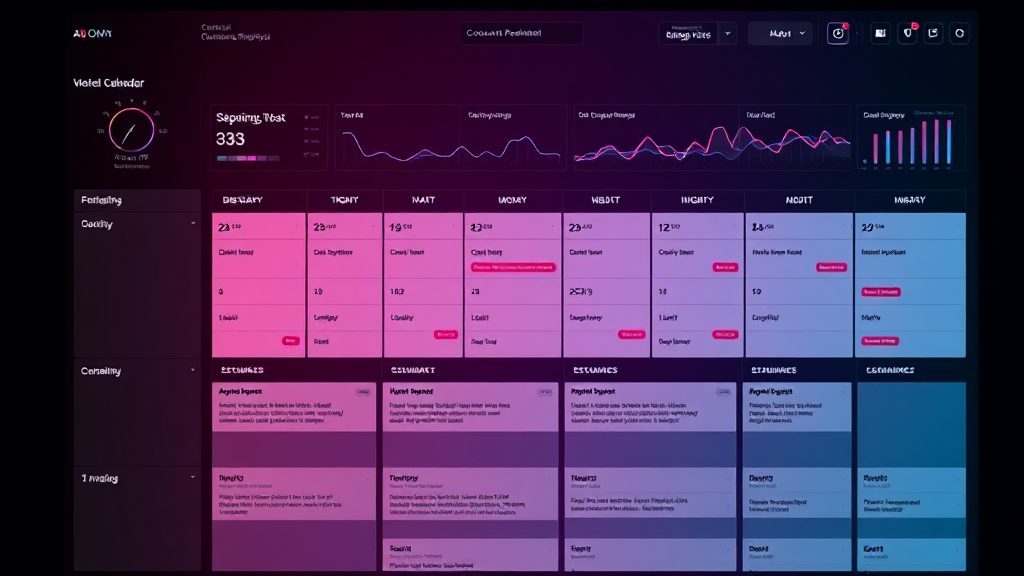
Most marketing teams drown in data while starving for insight. Your content dashboard shows pageviews, bounce rates, and session durations, but these metrics rarely answer the questions that actually matter: which content drives revenue, what patterns predict success, and where should you invest next? Content performance tool AI analysis has evolved from a luxury into a necessity for agencies and in-house teams that need to extract signal from noise and turn analytics into action.
We’ve spent the past year building and refining AI-powered content analysis systems for our clients, and the results have fundamentally changed how we approach content strategy. Instead of monthly reports that arrive too late to matter, we now surface insights in real-time, predict performance before hitting publish, and identify refresh opportunities that consistently deliver 200-400% traffic increases. Here’s what we’ve learned about making content analytics actually useful in 2026.
The Metrics That Actually Drive Decisions
The standard analytics dashboard fails most marketing teams because it conflates volume with value. A blog post with 10,000 pageviews that generates zero conversions isn’t successful—it’s expensive. Our team approaches content measurement through three lenses that map directly to business outcomes: engagement depth, conversion path influence, and topic authority development.
Engagement depth moves beyond surface metrics like time-on-page to examine behavioral signals that indicate genuine value. We track scroll depth at meaningful intervals (25%, 50%, 75%, 90%), return visitor rates for specific content pieces, and next-page navigation patterns. A manufacturing client discovered that their most-viewed product guide had a 12% scroll completion rate—readers landed, scanned the introduction, and left. The content ranked well but served no business purpose. After restructuring based on scroll-depth heatmaps, completion rates jumped to 64%, and the piece began generating qualified leads.
Conversion path influence requires connecting content performance to revenue, even when the relationship isn’t linear. Most content doesn’t directly convert; it builds trust, answers objections, or educates prospects who convert three touches later. We use multi-touch attribution models that assign partial credit to every content piece in a customer’s journey. For one SaaS client, a technical documentation article appeared in 78% of enterprise deal paths but almost never as the last touch. Standard analytics showed mediocre conversion rates; content analytics automation revealed it was their most valuable content asset by revenue influence.
Topic authority development tracks how your content ecosystem builds competitive positioning over time. We measure keyword clusters rather than individual rankings, internal link graph strength, and backlink velocity to topic-specific content. Your goal isn’t just ranking for individual keywords—it’s owning entire subject areas where prospects search for solutions. This requires tracking metrics at the topic level, not the page level, which traditional analytics platforms handle poorly.
Building an AI Content Performance Analyzer with Claude
Generic analytics dashboards can’t answer specific strategic questions about your unique business. We’ve built custom content performance tool AI analysis systems using Claude that ingest your analytics data, competitive research, and conversion tracking to generate insights tailored to your goals. The technical lift is surprisingly manageable, and the strategic advantage is substantial.
The foundation is a data pipeline that feeds Claude the context it needs. We typically pull from four sources: Google Analytics 4 for behavioral data, Search Console for organic performance, your CRM for conversion attribution, and competitor analysis tools for market context. The key is structuring this data in a format Claude can reason about effectively. We export weekly snapshots as structured JSON files—our free file converter tool handles the CSV-to-JSON transformation if you’re working with platform exports—and feed them into prompts that ask specific analytical questions.
A sample analysis prompt might look like: “Here’s our content performance data for Q2 2026, including pageviews, engagement metrics, and attributed conversions. Compare this quarter to Q1 and identify: (1) content pieces that maintained rankings but lost engagement quality, (2) topics where competitors gained ground, and (3) subject areas where we have high rankings but low conversion rates. For each issue, explain the likely cause and recommend a specific action.”
The responses consistently surface insights our team would take hours to find manually. For a healthcare technology client, Claude identified that their highest-ranking content cluster (patient engagement solutions) was losing ground to competitors who had published more recent regulatory compliance updates. The data was there in Search Console—declining impressions despite stable rankings—but the why required connecting search trends, competitor content dates, and topic analysis. Claude made that connection in seconds.
The more sophisticated application is building a continuous analysis system. We’ve developed Python scripts that automatically pull weekly data, generate analysis reports via Claude’s API, and flag anomalies or opportunities in Slack. One e-commerce client receives Monday morning briefs that highlight which product category content performed unusually well or poorly the previous week, with preliminary hypotheses about causes. This transforms analytics from a monthly retrospective into a weekly tactical advantage.
How Do You Find Content Refresh Opportunities That Actually Move Rankings?
Content refreshes deliver the best ROI in content marketing when done strategically, but most teams guess wrong about which pieces to update. The pages ranking 8-15 for target keywords, with historical traffic that’s declined 30-60% over the past year, and strong backlink profiles typically respond best to comprehensive updates.
Our blog performance insights AI approach analyzes several signals simultaneously. We look for content that once ranked positions 1-5 and has fallen to positions 6-15—these pieces already proved they could compete at the top, and the ranking decline usually indicates outdated information rather than fundamental topic mismatch. We also examine the current top-ranking content for those keywords to identify what’s changed: Are competitors now including more recent data? Have search intent patterns shifted from informational to transactional? Has the expected content depth increased?
A financial services client had a retirement planning guide that dropped from position 3 to position 12 over eight months. Traditional analysis showed declining traffic but offered no clarity on why. We used Claude to analyze the top 10 current ranking pages and compare them to our client’s content. The AI identified three specific gaps: competing content now included 2026 contribution limit updates, featured retirement calculator tools, and addressed recent tax law changes. Our client’s guide had none of these elements. After a targeted refresh adding these components—not a complete rewrite, just strategic additions—the piece returned to position 4 within three weeks.
The refresh prioritization framework we use scores content on four factors: ranking opportunity (how close to page one), traffic potential (historical and projected volume), conversion history (does this content type actually drive business results), and update efficiency (can we meaningfully improve it in under four hours). Content that scores high on all four factors gets immediate attention. This systematic approach consistently outperforms the “let’s update our most popular posts” strategy most teams default to.
Predicting Content Performance Before You Hit Publish
The most valuable application of AI in content analytics isn’t analyzing what already happened—it’s predicting what will happen. We’ve built predictive models that estimate traffic potential, ranking probability, and conversion likelihood before a single word is published. This transforms content planning from intuition-based to data-driven, and the accuracy has become genuinely useful for resource allocation decisions.
The methodology combines historical performance patterns with competitive landscape analysis. For any proposed topic, we analyze how similar content in your archive performed (accounting for age and promotion efforts), assess current competition in search results, evaluate search volume trends, and measure topical alignment with your existing authority. Claude processes all these variables and generates probability-weighted predictions: “This topic has a 70% chance of reaching page one within 90 days, with estimated monthly traffic of 800-1,200 visitors and a likely conversion rate of 2.3% based on similar content performance.”
These predictions aren’t perfect—content performance depends on execution quality, which no model can predict—but they’re directionally accurate enough to drive strategy. A B2B software client used our predictive system to evaluate 40 potential content topics for Q3 2026. The model ranked topics by expected ROI (predicted traffic × historical conversion rate × average deal value). They focused resources on the top 12 predicted performers. Three months later, those 12 pieces generated 4× more qualified leads than the bottom 12 would have, according to our comparative analysis of similar topics they’d published previously.
The prediction model also identifies structural factors that correlate with success. For service-based businesses, content that addresses specific buyer objections converts 3× better than general educational content, even when traffic volume is lower. For e-commerce, content featuring product comparison tables drives 40% higher conversion than standalone product guides. These patterns aren’t obvious from surface-level analytics, but they emerge clearly when AI analyzes hundreds of content pieces across multiple dimensions simultaneously.
We’ve also started using prediction models to optimize content before publication. Draft analysis identifies potential weaknesses: “This piece lacks the depth expected for this keyword—current top-ranking content averages 2,400 words while this draft is 1,100. It’s missing specific examples that appear in 80% of competing content. The internal linking structure is weaker than your typical top performers.” These pre-publish audits have noticeably improved first-draft performance, reducing the need for extensive post-publication optimization.
Measuring Content ROI Beyond Vanity Metrics
The hardest question in content marketing—”What’s our return on this investment?”—finally has defensible answers in 2026. Content ROI measurement requires connecting creative effort to revenue outcomes, which traditional attribution struggles to handle. Our approach combines multi-touch attribution, content-influenced pipeline tracking, and algorithmic contribution scoring to assign dollar values to content performance.
The technical foundation is tracking every content interaction for users who eventually convert, then using an AI model to weight the influence of each touchpoint. Unlike simplistic last-touch or first-touch models, this approach recognizes that a prospect might read your pricing guide (high intent, late stage), then your comparison article (mid-funnel education), then your founder’s vision piece (trust building), before requesting a demo. Each piece contributed differently, and the model assigns proportional revenue credit.
For a professional services firm, we tracked content interaction data for six months and ran it through our attribution model. The results contradicted conventional wisdom: their most-viewed content (industry news roundups) generated almost zero attributed revenue, while a technical implementation guide with 10× lower traffic appeared in 65% of closed deals. This insight drove a complete content strategy pivot—less news aggregation, more deep technical resources. The following quarter, content-influenced revenue increased 180% while content production costs decreased 30%.
The ROI framework also accounts for content lifetime value. A piece published in January 2026 that still generates qualified leads in December has fundamentally different economics than paid advertising that stops working the moment you stop spending. We calculate content ROI across 12-month rolling windows, which captures the compounding value of content that continues performing. For most clients, content ROI measured at 12 months is 3-5× higher than 90-day measurements, because the full compounding effect takes time to materialize.
This connects directly to our broader approach to SEO and organic growth, where content performance is just one component of a comprehensive system. The most effective strategies integrate content analytics with technical SEO improvements, link building efforts, and conversion optimization to create compounding advantages that pure content plays can’t match.
Making AI Content Analysis Part of Your Marketing Operations
The strategic advantage of AI-powered content analytics isn’t the technology—it’s the operational discipline of actually using insights to drive decisions. We’ve seen teams build sophisticated analysis systems that generate excellent reports that nobody acts on. The value materializes only when insights trigger workflow changes, budget reallocations, and strategic pivots.
The integration pattern that works best is embedding AI analysis into existing meeting rhythms rather than creating new processes. During weekly content planning meetings, review the predictive performance scores for proposed topics before assigning resources. During monthly strategy reviews, examine the refresh opportunity report and commit to updating the top five pieces. During quarterly planning, review the ROI analysis and reallocate budget toward proven content types. This turns analysis from an optional research project into operational infrastructure.
We’ve also found that custom dashboards beat generic ones by enormous margins. Rather than logging into Google Analytics to explore, build a dashboard that automatically surfaces the ten metrics your team actually needs to make decisions. For one client, that’s simply: top-performing content this week, biggest ranking movements, refresh opportunities above 80% confidence, and content-influenced pipeline value. The entire dashboard fits on one screen, updates daily, and drives 90% of their content decisions. More data availability doesn’t equal better decisions—focused, relevant data does.
The human element remains crucial. AI excels at pattern recognition and data synthesis but struggles with creative strategy and brand judgment. The most effective teams use AI to eliminate analytical grunt work and surface non-obvious patterns, then apply human judgment to decide what those patterns mean for their specific business context. A declining engagement metric might mean “refresh this content” or “this topic no longer serves our positioning”—the data can’t make that strategic call, but it can surface the question much faster than manual analysis.
For organizations serious about scaling these capabilities, our AI and automation services help build custom systems that integrate with your specific data sources, business logic, and decision-making processes. The implementation typically pays for itself within one quarter through better content resource allocation alone.
From Data Overload to Strategic Clarity
Content marketing in 2026 generates more data than any team can manually process, but the teams that win aren’t drowning in dashboards—they’re using AI to extract the specific insights that drive revenue. The shift from descriptive analytics (what happened) to predictive and prescriptive analytics (what will happen, what should we do) represents a fundamental competitive advantage that compounds over time.
Your content analytics system should answer three questions every week: What’s working better than expected and why? What’s underperforming despite strong fundamentals? Where should we invest next for maximum return? If your current analytics setup can’t answer these questions clearly and quickly, you’re operating with a substantial disadvantage against competitors who can.
The good news is that building effective content performance tool AI analysis systems is more accessible than most teams assume. You don’t need data science expertise or enterprise software budgets—you need clean data exports, clear strategic questions, and systematic application of AI tools that already exist. We’ve helped dozens of marketing teams implement these systems over the past year, and the consistent pattern is that insights start flowing within weeks, not months, once the foundation is in place.
Ready to move beyond guesswork in your content strategy? Our team has built the analysis frameworks, predictive models, and integration systems that turn content data into competitive advantage. Whether you need help implementing AI-powered analytics, refreshing underperforming content that should be ranking, or building a comprehensive content performance measurement system, we’ve done it repeatedly and know what actually works. Get in touch to discuss how AI-driven content analysis can transform your marketing results.